








What makes a great facility management (FM) leader? Sure, some qualities are timeless. Facility managers must be good problem-solvers and multi-taskers. They need to have solid organization and communication skills, an eye for detail, and a keen ability to sense risk.
But the world has changed drastically in recent years — for reasons we know all too well — and this is placing huge new demands on the FM profession. As an IFMA chapter, it’s our responsibility to help members, and the profession at large, better understand and prepare for those challenges.
At the heart of this mission is a question that serves as a guiding principle: are we cultivating the right skills to develop tomorrow’s FM leaders?
Across the board, organizations are forming hybrid working strategies in response to changing employee needs. Most people wish to keep their flexible privileges, but they don’t want to lose the office altogether. When they’re in the office, employees want variety and the freedom to choose the type of space that works for them. Ultimately, they need the office to service a specific purpose, whether it’s for focused work, collaboration, socializing, etc or anything else.
It’s easy to get caught up in the hype that offices of the future will be designed for collaboration — and while that may be true for many, others still need an office to concentrate on individual tasks, confidential meetings, etc. We only need to think about the young professionals in urban centres such as Toronto who may live in small apartments without adequate space for working or are surrounded by noisy roommates/family members also at home.
All this reinforces the fact that we tend to forget, work isn’t a place where you go but a thing that you do. Likewise, the workplace isn’t just a physical building. It also exists online and in the intangible relationships between colleagues.
For both service providers and in-house FM teams, these evolving dynamics require a shift in approach from facility manager to experience manager. As experience managers, FM professionals need to find out what individuals and teams need to work most effectively. This means identifying what activities people do, where they do them, and how often. It also means learning what tasks the home or other remote locations support and what makes employees productive in the office.
Then, it’s about delivering the spaces, infrastructure and experiences that support people across every setting. As a concept, activity-based working has been around since the 1960s. Today, however, its tenets must form the foundation of any workplace or hybrid working model.
Numerous studies have found that when given the power to choose where they work, most people visit the office during the middle of the week, using Mondays and Fridays as work-from-home days to stretch the weekend. Leaving aside the potential inefficiency from a real estate and energy perspective, these occupancy patterns lead to drastically different experiences for employees depending on which days they go to the office, and challenge FM teams to manage available space and design a more equitable experience across both busy and quieter days. That’s where experience managers can make all the difference.
Looking ahead, FM needs to foster several skill sets to ensure that the profession can rise to these new challenges. The transition to experience managers demands more focus on softer skills, especially emotional intelligence and interpersonal skills that will encourage more people into the profession who might have an outdated view of it as a technical-heavy, hands-on discipline.
At the same time, we cannot underestimate how critical technology plays in curating these exceptional experiences. We don’t know what we don’t know — or, perhaps more accurately, we don’t know what we can’t measure. FM leaders need to harness workplace data and analytics to make data-driven decisions that accurately capture people’s needs, work styles, preferences, and movements. To ensure this happens, FM leaders need to understand how the workplace technology at their disposal can help drive these outcomes
Thirdly, FM must leverage these skills to develop greater cross-collaboration between other strategic departments to foster a culture of innovation and continuous learning.
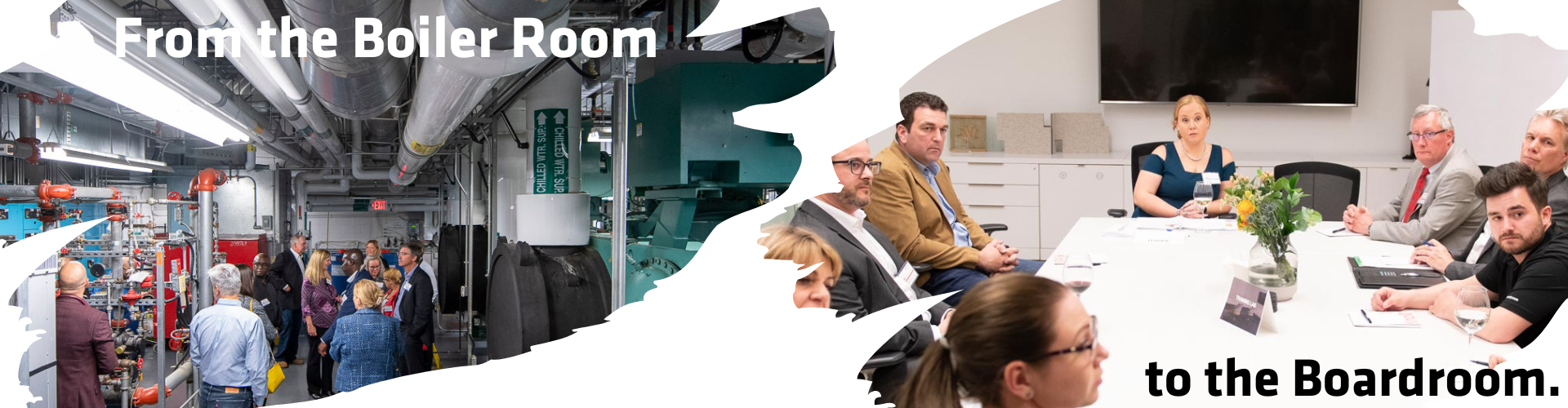
Facility managers are now sitting at the boardroom table, participating in discussions and strategy focused on the future of work and the organizational purpose of the workplace. FM plays a direct role in shaping an employee experience that clearly defines the workplace’s purpose and aligns with broader business strategy. It’s time for our profession to step up to the challenge.
